
The best cold email software in 2026, ranked

Updated July 2026. Prices checked 2026-07-22; this page gets a monthly fact-check.

Eight tools, one ranked list, and a plain premise: seven of these are cold email platforms, software you operate to send campaigns at volume, and one is an AI SDR that sends email. The order reflects fit for founders and small teams running their own cold email, judged on entry price, what the sticker actually includes, deliverability tooling, and what the tool does for replies rather than sends. An agency buying pure sending volume would rank this list differently, and the second entry is where its list starts.

We build driftwood (driftwood.sh) and put it at number one; judge the order accordingly. driftwood is not a sending platform, and its entry says so.

At a glance

Eight tools, what each one is, and what getting in costs.

Every cell is words, not checkmarks. Prices are monthly entry points we verified at the July check; where the working total depends on add-ons, the entries below say so.
Tool What it is Entry price (as of July 2026) Best for
driftwoodour tool AI SDR for demo-led outbound: a working demo of your product, built per prospect, in every message; not a sending platform $1,000 to $5,000 a month, published Founders and small teams whose constraint is replies, not sends
Instantly Cold email platform: unlimited sending accounts, warmup, campaigns, a shared inbox From $47 a month (Growth); top sending tier $358 Agencies and teams whose motion is proven high-volume email
Smartlead Cold email sending, unlimited mailboxes and warmup on every plan From $39 a month Teams that want the unlimited-mailbox model, different economics
lemlist Multichannel sequencer: email and LinkedIn steps in one campaign $69 per user per month email only; $109 multichannel Small teams working LinkedIn and email together
Apollo Sequencing inside a B2B data platform: database, dialer, light CRM, per seat Free tier; paid from $49 per user per month billed annually Teams that want data and sending in one seat
Saleshandy Cold email sequencer, unlimited email accounts on every plan From $25 a month billed annually; $36 monthly Teams that want the lowest entry sticker and will watch add-ons
Woodpecker Cold email platform priced per contacted prospect, not per mailbox Usage-based: $35 a month for 500 contacted prospects Teams contacting a modest, deliberate list
MailReach Deliverability layer: automated warmup and spam tests, not a sender $19.50 per mailbox a month Anyone who has never independently tested inbox placement

Work at any of these companies and see a price or claim that is wrong or stale? Email aayush@driftwood.sh and we will fix it.

If you are pricing autonomous agents rather than sending software, we keep a separate ranked AI SDR comparison.

what a templated volume send looks like

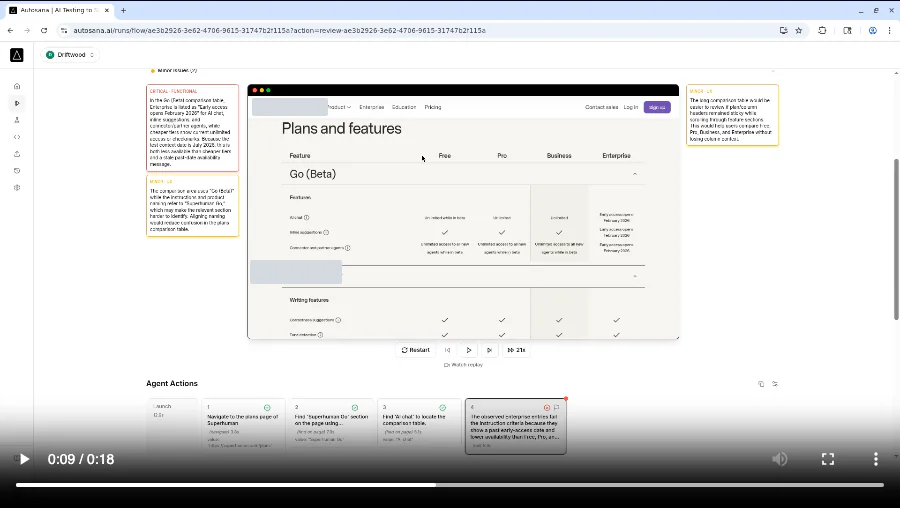
what driftwood sent

CTO @
Yuvan Sundrani · 6:57 PM · sent by driftwood

hey , found a bug on . our agents caught your pricing page still promising early access for features lower tiers already have…

19 second demo video of Autosana's agent catching a pricing bug on the prospect's site

driftwood built this demo

CTO · 7:18 AM

send me a blurb + demos to and I'll forward to my team - best

The right window is a real send from the Autosana week; identities redacted.

What you are buying

The platform model, the sticker, and the ceiling every sender hits.

The platform model

Software you operate. A cold email platform sells three things: mailbox management, warmup, and a sequencer. You bring domains, mailboxes, a lead list, and copy; the tool rotates sending across accounts and keeps each mailbox's daily volume low. That is why unlimited-mailbox pricing became the category norm: operators scale by adding mailboxes, not by pushing one address harder.

The sticker and the stack

Every price here is a floor. Domains and mailboxes come from a registrar and an inbox provider, data credits and verification bill separately, and LinkedIn steps cost extra where they exist at all. On Instantly, public 2026 reviews put realistic working totals at two to four times the sending plan price, and the pattern holds across the category. Budget the stack, not the sticker.

The ceiling

Sending is not replying. A bigger sending engine moves sends and opens and very little else; the named-source reply and conversion numbers, with methodology, live on our cold outbound benchmarks page. If replies are your constraint, the message is the problem, not the sender, and that is the bet the first entry in the ranking makes.

The ranking

driftwood leads because it is ours and because the ranking basis favors what it does; the seven platforms run from the category default to the deliverability layer. Every entry names who should pick that tool over us.

driftwoodour tool

The different animal. driftwood is not a cold email platform; it is an AI SDR that sends email. The agent researches each prospect, builds a working demo of your product for their business, and drafts the message; a person approves each send, and it goes out from your own email or LinkedIn account. You review sends instead of operating campaigns. The full model is on the demo-led outbound page.

Why it leads this list. Every platform below raises how many emails you can send; driftwood changes what each one carries. When cold email is not returning replies, the second lever is the one that moves.

Reply rate before

under 1%

Reply rate, week one

over 14%

On the same lead list, replies went from under 1% to over 14% in week one at Autosana (YC S25).

The trade. Published pricing runs $1,000 to $5,000 a month, on our FAQ, which is more than any sending plan on this page, and volume is deliberately lower. If your offer is proven and your market is large enough for volume math, buy a platform below instead.

Best for: founders and small teams whose product demos well and whose constraint is replies rather than sends.

Instantly

The category default. Instantly is the tool the rest of the category prices against: unlimited sending accounts, warmup in the box, campaigns from one dashboard, replies in a shared inbox. The sending plans at the July check: Growth at $47 a month for 5,000 emails, Hypergrowth at $97 for 100,000, and Light Speed at $358 for 500,000, with about 20 percent off billed annually.

The catch. The lead database, CRM, and AI agents bill separately as credit subscriptions, and domains and mailboxes come from elsewhere. The full breakdown, including the recurring complaints from public reviews, is on our Instantly page.

Best for: agencies and teams whose motion is proven high-volume email and who want the most tooling per dollar.

Smartlead

The like-for-like rival. Smartlead runs the same unlimited-mailbox, warmup-included model from $39 a month for 2,000 active leads, with white-label workspaces and an API that make it a favorite with agencies.

The trade. The differences from Instantly live in the details: infrastructure control, billing, agency tooling. If the model appeals and the Instantly details grate, evaluate this one first.

Best for: teams and agencies that want the unlimited-mailbox model with different economics and more infrastructure control.

lemlist

The second channel. lemlist is a multichannel sequencer: email and LinkedIn steps in one campaign, priced per user at $69 a month for email only and $109 for multichannel.

The trade. Per-user pricing costs more per seat than the volume senders and scales with team size rather than sends; in exchange it covers the channel the pure email tools do not touch.

Best for: small teams whose prospects answer on LinkedIn as much as email.

Apollo

The bundle. Apollo is sequencing inside a data platform: a large B2B contact database, sequences, a dialer, and light CRM in one per-seat product, with a usable free tier, paid plans from $49 per user per month billed annually, and credits drawn from annual pools.

The plain read. If what you actually need is data and a sequencer in one seat, check Apollo before any dedicated sender on this page; a dedicated platform earns its keep once volume or deliverability outgrows the bundle.

Best for: teams that want data and sending in one seat without assembling a stack.

Saleshandy

The low sticker. Saleshandy's Outreach Starter runs $25 a month billed annually, or $36 monthly, with unlimited email accounts, 2,000 active prospects, and 6,000 emails a month; Outreach Pro at $69 billed annually raises that to 30,000 prospects and 150,000 emails.

The trade. The add-on sheet is long: verification at $19 per 5,000 recipients, managed mailboxes from about $3 a month each, and inbox placement tests on their own paid tiers. The sticker is real; the working total depends on how much of that you switch on.

Best for: teams that want the unlimited-account model at the lowest entry price and will watch the add-ons.

Woodpecker

The per-prospect meter. Woodpecker prices by contacted prospects rather than seats or mailboxes: $7 per 100 contacted prospects on monthly billing, so the 500-prospect entry tier runs $35 a month, with about a third off billed annually. Email accounts, team seats, and catch-all verification are unlimited at no extra charge.

The trade. The meter rewards deliberate lists and punishes spray-and-pray, the opposite of the unlimited-volume economics elsewhere on this page. LinkedIn outreach bills as an add-on at $29 a month per connected account.

Best for: teams contacting a modest, deliberate list who want cost tied to prospects rather than volume.

MailReach

Not a sender. MailReach is the deliverability layer: automated warmup plus spam testing at $19.50 per mailbox a month, about 20 percent off billed annually, run beside whichever sender you pick.

Why it ranks. Built-in warmup dashboards measure activity inside the vendor's own network; an outside warmup and an independent placement test catch what those numbers miss. It is the cheapest line on this page and the first one to add when sends go quiet.

Best for: anyone running cold email at volume who has never independently tested inbox placement.

How to choose

Name your constraint first; the tool follows from it.

Choose a sending platform if

  • Your offer is proven and your market is large enough that volume math works: Instantly or Smartlead, and Saleshandy if the entry sticker matters most.
  • You want cost tied to how many prospects you contact rather than seats or mailboxes: Woodpecker.
  • Your prospects answer on LinkedIn as much as email: lemlist.
  • You want the database and the sequencer in one seat: Apollo.

Choose something else if

  • Your bottleneck is who to contact, not how to send: Clay, which is a data workbench rather than a sender; we compared Clay alternatives separately.
  • Your sends land in spam: fix deliverability first, MailReach plus an independent placement test, before buying more volume.
  • Replies are the constraint and your product demos well: driftwood, with a working demo of your product in every message.
  • You are pricing autonomous agents, not software: our ranked AI SDR list.

Whichever way you go, the budget math runs on reply rate, not send volume. The named-source reply and conversion numbers are on our cold outbound benchmarks page.

FAQ

Four short answers.

What does cold email software cost in 2026?

The stickers. Entry prices on this list run $19.50 to $69 a month: MailReach at $19.50 per mailbox, Saleshandy from $25 billed annually, Woodpecker at $35 for 500 contacted prospects, Smartlead from $39, Instantly from $47, Apollo from $49 per user billed annually, and lemlist from $69 per user.

The floor, not the total. Domains, mailboxes, data credits, verification, and extra warmup bill separately almost everywhere, and public 2026 reviews of Instantly put realistic working totals at two to four times the sending plan price. driftwood is the outlier at a published $1,000 to $5,000 a month because it is an agent you hire, not software you operate.

Do I need a separate warmup or deliverability tool?

Built-in warmup is not placement. Instantly, Smartlead, and Woodpecker include warmup, but a warmup dashboard measures activity inside the vendor's own network, and reviewers regularly flag the gap between those numbers and landing in a real prospect's inbox.

The outside check. An independent layer such as MailReach, at $19.50 per mailbox a month with spam tests included, tells you what the built-in dashboards cannot. Run a placement test before trusting any green number.

Which of these tools can run LinkedIn steps, not just email?

Two price it natively. lemlist runs email and LinkedIn steps in one sequence at $109 per user per month, and Woodpecker adds LinkedIn outreach for $29 a month per connected account. Instantly, Smartlead, and Saleshandy are email only.

And the different animal. driftwood sends over LinkedIn or email from your own accounts, with the same demo-led message either way.

Is cold email software the same thing as an AI SDR?

No. Cold email software is a platform you operate: you bring the list, the copy, and the judgment, and the tool executes the sending. An AI SDR does the operating itself: it researches prospects, writes messages, and works the channel with less of your time on each send.

Where driftwood sits. driftwood is an AI SDR that sends email, which is why it appears on this list as the different animal rather than a platform pick. If you are pricing that whole category, our ranked AI SDR comparison covers it.

See a demo built for your business

Twenty minutes. We will show you what your prospects would see.

Book a demo