Apollo alternatives
By the driftwood team · July 2026
Updated July 2026. Pricing and features get a monthly fact-check.
The disclosure, first. We build driftwood
(
driftwood.sh), and it is one of the six
alternatives below. Judge the page accordingly. To make it worth your time
anyway, every entry says who should pick that tool, and the last section
covers when Apollo is the right choice, including over us. Fair warning:
for most readers of this page, the answer is to keep Apollo.
People searching for Apollo alternatives are usually unhappy about one of
four things: data accuracy in their particular segment, the credit meter,
deliverability on lists exported straight into sequences, or reply rates
that stayed low no matter how many sequences went out. Those are four
different problems, and only some of them are Apollo's fault, so this
page starts with what Apollo actually is and where it genuinely wins. If
you want the whole AI SDR category instead, we keep
a separate ranked comparison.
What Apollo is, and what it is genuinely good at
Apollo is a sales platform built around a B2B contact database that Apollo
says covers more than 240 million contacts and 30 million companies as of
July 2026. Around the database sits most of the outbound stack: email
sequencing, a dialer, meeting scheduling, enrichment, intent topics, light
CRM and deal features, and an AI assistant. It is one per-seat product
that replaces what would otherwise be a data provider, a sequencer, and a
dialer bought separately.
As of July 2026 there is a free tier with a small monthly credit grant,
then three paid plans billed annually: Basic at $49 per user per month,
Professional at $79, and Organization at $119 with a three seat minimum.
Monthly billing costs more. Apollo restructured its credit system in late
2025: paid plans now grant a yearly credit pool per seat, 30,000 on Basic,
48,000 on Professional, and 72,000 on Organization, which covers contact
reveals and exports. Phone numbers consume several times the credits of an
email, and credits do not roll over.
What it is genuinely good at: consolidation at a low price. One login
covers finding contacts, sequencing them, and calling them, and $49 a seat
undercuts buying a database and a sequencer separately by a wide margin.
The free tier is a real evaluation path, coverage of US tech and SMB
companies is strong, and because Apollo is everywhere, most reps you hire
will already know it. As the pragmatic default for a small US-focused
sales team, it is hard to argue with.
Where Apollo falls short, and for whom
Data accuracy depends on your segment
Coverage of US tech and SMB is Apollo's home turf. Reviews and Reddit
threads through 2026 report staler data outside it: outdated titles and
bounced emails are the most common complaints for Europe, APAC, and
Latin America. The pattern is consistent enough that you should verify
exported lists with an independent checker before sending, whatever your
segment. If your market is one Apollo covers thinly, the database that
justifies the bundle stops justifying it.
The credit meter
Since the late 2025 restructure, usage is metered against a yearly
credit pool per seat. Reveal-heavy prospecting burns through it, phone
numbers cost several times what emails do, and unused credits expire.
Teams that prospect hard on lower tiers report hitting the pool well
before the year ends, at which point the choice is overage credits or a
tier upgrade. Budget for how you actually prospect, not the sticker.
Deliverability is your problem, not Apollo's
The workflow Apollo makes easiest, exporting a filtered list straight
into a sequence, is also the fastest way to burn a sending domain. The
verified label on a contact is not a guarantee, and 2026 reviews
regularly describe damaged domains from teams that trusted it and
skipped their own checks. Apollo ships warmup and deliverability
guidance, but placement is still yours to earn, on your own domains.
Everything included, nothing best-in-class
The bundle is the pitch, and each piece shows it. The sequencer has
fewer sending and infrastructure controls than dedicated senders, the
dialer trails purpose-built dialers, and the CRM features are light
enough that most teams still run a real CRM beside it. Teams tend to
outgrow Apollo one piece at a time, which is exactly how the
alternatives below are organized.
More sends will not fix low replies
Apollo makes it easy to put thousands of people into a templated
sequence, and for many teams that is the whole strategy. If replies are
under 1 percent, the platform is not the bottleneck; the message is.
Switching to a different database and a different sequencer to send the
same message rarely moves the number.
Six real alternatives
1
Apollo gives you the whole outbound stack to operate. driftwood is a
different bet: an agent that runs one motion,
demo-led outbound, end to end. It
researches each prospect, builds a working demo of your product for
the specific prospect receiving it, and drafts the message. A human
approves every send, and it goes out from your own LinkedIn or email
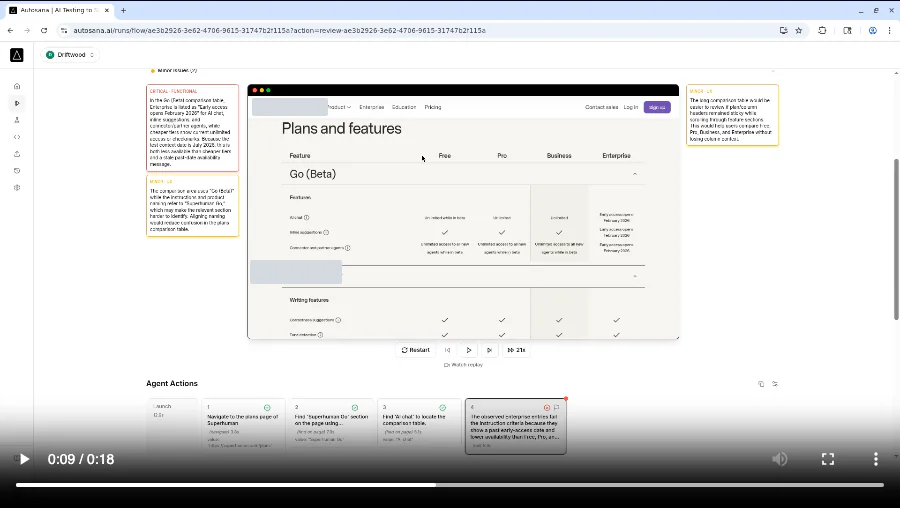
account, not a bot inbox. On the same lead list, replies went from
under 1% to over 14% in week one at
Autosana (YC S25).
The honest fit: driftwood is early, and it is not a database, so it
replaces Apollo's sequencing, not its data. It trades volume for
depth: if your model needs thousands of touches a week, it is the
wrong tool.
Best for: founders and lean
teams selling a product that demos well, whose problem is reply rate,
not contact coverage.
2
Amplemarket is the closest like-for-like swap: contact data,
multichannel engagement, deliverability tooling, and an AI copilot
called Duo in one platform. It keeps the consolidation trade that
brought you to Apollo but aims it at sales teams willing to pay more
for better tooling around deliverability and messaging. If the
bundle is right and the execution is what disappoints, evaluate this
one first.
Best for: sales teams that
want data and outreach from one vendor at a higher grade than
Apollo's.
3
If your complaint is specifically data quality, Clay is the direct
answer. Instead of one database, it runs waterfall enrichment across
more than a hundred providers, checking each in turn until one has
the contact, plus AI research columns and buying signals. As of July
2026 there is a free tier and paid plans from $185 a month ($167
billed annually). The trade is real: Clay is a workbench that wants
an operator, not a database with a search box. We compared
Clay alternatives separately.
Best for: teams whose
bottleneck is data coverage or accuracy, with someone technical to own
the workbench.
4
Smartlead replaces the sequencer, not the database: dedicated cold
email infrastructure with unlimited mailboxes and warmup included,
from $39 a month as of July 2026. Teams that keep Apollo for data on
a cheap tier and move sending to Smartlead get better deliverability
control than Apollo's sequencer offers, at the cost of running two
tools.
Best for: teams keeping
their data source but moving sending onto dedicated
infrastructure.
5
lemlist covers the channel Apollo mostly does not: email and
LinkedIn steps in one sequence, with calling on higher tiers, plus
its own lead database. Pricing is per user, $69 a month for email
only and $109 for multichannel as of July 2026. If your prospects
answer LinkedIn DMs and ignore cold email, this is the shape of tool
to switch to.
Best for: small teams whose
prospects live on LinkedIn as much as email.
6
Instantly is the budget volume answer: sending plans from $47 a
month as of July 2026 with unlimited mailboxes and warmup included,
and its own lead database as a separate add-on. Against Apollo the
case is pure sending economics at high volume; the data quality
caveats that apply to Apollo apply at least as much here. We
compared Instantly
alternatives separately.
Best for: teams whose model
is high-volume cold email at the lowest credible price.
When Apollo is the right choice
More often than any other tool we cover, Apollo is the right choice. If
you sell into US companies, run a normal per-seat sales team, and want
data, sequencing, and calling in one product, nothing on this page beats
Apollo's price-to-coverage ratio, and most of the alternatives cost more
in total once you rebuild the bundle from parts. The complaints above are
real, but they are the cost of consolidation, and for many teams the
convenience is worth it. The honest dividing line: keep Apollo while the
bundle is the value. Move when one specific failure, data in your segment,
deliverability, or a reply rate that will not budge, costs you more than
the convenience saves, and then pick the alternative aimed at that
failure rather than a second bundle.
FAQ
What does Apollo cost in 2026?
As of July 2026: a free tier, then Basic at $49 per user per month,
Professional at $79, and Organization at $119 with a three seat minimum,
all billed annually; monthly billing costs more. Paid plans grant a
yearly credit pool per seat (30,000 on Basic, 48,000 on Professional,
72,000 on Organization) covering contact reveals and exports, and
credits do not roll over. Check apollo.io for current numbers.
Is Apollo's contact data accurate?
It depends on your segment. US tech and SMB coverage is widely
considered Apollo's strongest area. Reviews and Reddit threads through
2026 report staler data outside it, with outdated titles and bounced
emails most common for Europe, APAC, and Latin America. Wherever you
sell, verify exported lists before sending.
What is the closest direct alternative to Apollo?
Amplemarket, for the same data-plus-outreach consolidation at a higher
grade. If the complaint is specifically data quality rather than the
platform, Clay's waterfall enrichment is the more direct answer.
Will switching tools fix a low reply rate?
Usually not. If deliverability is healthy and replies are still under 1
percent, the message is the problem, not the platform. The case for
changing what the message carries is laid out in
demo-led outbound, and the result at
one company is written up in
the Autosana story.
See a demo built for your business
Twenty minutes. We will show you what your prospects would see.
Book a demo