The best AI SDR tools in 2026, ranked

Updated July 2026. Prices checked 2026-07-21; this page gets a monthly fact-check.

Ten AI SDR tools, one ranked list, and the taxonomy that matters more than the order: autonomous agents, signal-driven platforms, and engagement copilots are three different purchases. The order reflects fit for founders and small teams whose constraint is replies rather than sends, judged on what the message carries, who controls the send, entry cost, and setup burden. A mid-market org buying volume would rank this list differently, and the second entry is where its list starts.

We build driftwood (driftwood.sh) and put it at number one; judge the order accordingly.

At a glance

Ten tools, what each one is, and what getting in costs.

Every cell is words, not checkmarks. Prices are entry points we verified at the July check; where a vendor publishes none, the cell says so rather than guessing.
Tool What it is Entry price (as of July 2026) Best stage
driftwoodour tool GTM agent for demo-led outbound: a working demo of your product, built per prospect, in every message $1,000 to $5,000 a month, published Founders and small teams whose product demos well
11x (Alice) Autonomous digital workers: Alice runs outbound end to end, Julian covers the phone No public pricing; reported near $5,000 a month, annual contract Mid-market and enterprise replacing SDR headcount
Artisan (Ava) Autonomous AI BDR, self-serve since the Ava 2.0 relaunch Quote-based tiers on the public page; self-serve entry around $250 a month, reported Small teams testing the autonomous model
AiSDR Autonomous agent pitched on lead quality and fast setup Around $900 a month Lean teams with proven product-market fit
Topo AI outbound agent trained on your playbook, working beside your reps None published that we could verify Teams with a proven playbook to hand off
Unify Signal-driven outbound: intent triggers decide who gets contacted None published that we could verify Product-led companies with real intent signal
Clay Data workbench: waterfall enrichment, AI research columns, workflows you assemble Free tier; paid from $185 a month Teams with a RevOps or GTM engineering owner
Amplemarket All-in-one platform: data, engagement, deliverability, an AI copilot (Duo) for reps None published that we could verify Sales teams that want AI leverage, not replacement
Regie.ai AI sales engagement platform pairing agents with human reps None published that we could verify Existing SDR teams that need speed
Autobound Signal data layer: buying signals and generated copy, delivered by API None published that we could verify GTM engineers and platforms building their own pipeline

New to the category? What an AI SDR is covers the terms; this page assumes you are choosing one.

what a volume agent sends

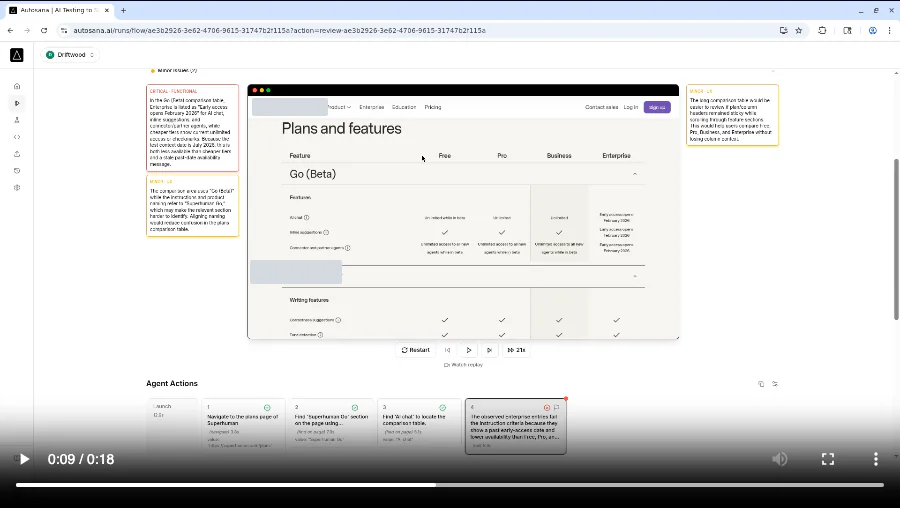
what driftwood sent

CTO @
Yuvan Sundrani · 6:57 PM · sent by driftwood

hey , found a bug on . our agents caught your pricing page still promising early access for features lower tiers already have…

19 second demo video of Autosana's agent catching a pricing bug on the prospect's site

driftwood built this demo

CTO · 7:18 AM

send me a blurb + demos to and I'll forward to my team - best

The right window is a real send from the Autosana week; identities redacted.

Three kinds of tool, three different bets

Knowing which motion you are buying matters more than any ranking, ours included.

Autonomous AI SDR agents

The bet. 11x's Alice, Artisan's Ava, and AiSDR run outbound end to end: they source prospects, write and send sequences, handle follow-up, and book meetings at a volume no human team matches. You buy one the way you would hire, to replace or avoid SDR headcount.

The exception. Topo is the partial exception: its agent works beside your reps, trained on your playbook, rather than replacing them.

Signal-driven outbound platforms

The bet. Unify, Clay, and Amplemarket put signals and data in charge of targeting: job changes, website visits, and funding rounds decide who gets contacted and when, and AI drafts copy at scale.

Who runs it. Humans still run the motion; the platform decides where to point it.

Engagement platforms and copilots

The bet. Regie.ai has repositioned from pure copilot to an AI sales engagement platform: AI agents and human reps share one workflow, with the agents on the busywork and the reps on the conversations.

Who it fits. The right pick when the team is the asset and the tooling is the lever.

The ranking

Autonomous agents first, then signal platforms, then copilots and infrastructure. driftwood leads because it is ours and because the ranking basis favors what it does; every entry says who should pick that tool over us.

driftwoodour tool

What it is. driftwood is a GTM agent built around demo-led outbound: every message carries a working demo of your product, built for the specific prospect receiving it, so the prospect sees your product working on their problem before deciding whether to reply.

How it runs. The agent researches the prospect, builds the demo, and drafts the message; a person reviews each send, and sending happens from your own LinkedIn or email account rather than a bot inbox. Published pricing runs $1,000 to $5,000 a month, on our FAQ.

Reply rate before

under 1%

Reply rate, week one

over 14%

On the same lead list, replies went from under 1% to over 14% in week one at Autosana (YC S25).

The trade. driftwood is early, and it trades volume for depth. If you want thousands of touches a month on autopilot, pick one of the autonomous agents below.

Best for: founders and small teams selling a product that demos well, whose constraint is replies rather than capacity.

11x (Alice)

The product. Alice, the flagship, runs sourcing, multi-channel sequencing, and follow-up with little day-to-day steering, and Julian covers the phone. It is the fullest expression of the replace-headcount bet, the opposite of the one driftwood makes, and for raw volume it is a strong one.

The price and the record. There is no public pricing; entry is reported near $5,000 a month on an annual contract. In March 2025 TechCrunch reported that some companies whose logos appeared on 11x's site said they were not customers; 11x disputed the characterization, and its investors backed it. The dated, both-sides timeline is on our 11x page.

Best for: larger sales orgs replacing or avoiding outbound headcount at scale.

Artisan (Ava)

The product. Artisan sells Ava, an autonomous AI BDR, inside a broader vision of AI employees that take over whole roles: the same replace-the-hire bet as 11x, sold self-serve since the Ava 2.0 relaunch, with a polished product covering lead discovery through follow-up.

The pricing nuance. Artisan's public pricing page has moved to quote-based tiers; the roughly $250 a month self-serve entry is reported rather than published, so confirm it before budgeting. Our Artisan page breaks the tiers down.

Best for: teams that want one autonomous outbound hire, from solo founders up.

AiSDR

The pitch. AiSDR is an autonomous agent with a reputation for fast setup: most customers are live within a week. The current pitch is lead quality over volume, fewer sends with better research behind each one.

The price. Entry pricing around $900 a month puts it closer to mid-market than budget SMB.

Best for: lean sales teams with proven product-market fit that want an agent live quickly.

Topo

The product. Topo, a YC-backed company, is an all-in-one AI outbound platform whose agent works beside your reps rather than replacing them: it is trained on your ICP, your playbook, and your call transcripts, with human approval modes that set how much it does alone.

The fit. That makes it the pick when you already know what works and want an agent to execute it faithfully.

Best for: teams with a proven outbound playbook to hand off.

Unify

Signals first. Unify made its name on warm outbound: buying signals such as deanonymized website visitors, job changes, and product usage trigger plays that decide who gets contacted and what they hear.

The fit. If your funnel throws off real intent data, Unify is built to act on it; if it does not, the signal engine has nothing to run on.

Best for: teams with strong intent signals, especially product-led companies.

Clay

The workbench. Clay is less an SDR and more a data and GTM workbench: waterfall enrichment across more than a hundred providers, flexible tables, and AI research columns that feed whatever sequencer or CRM you run. Plenty of tools on this list stand on the kind of data work Clay makes possible.

The cost. There is a free tier and paid plans from $185 a month; the real cost is the operator who builds and maintains it. Our Clay page covers the credit model and the tiers.

Best for: GTM engineers and ops teams who want to build their own motion from the data up.

Amplemarket

The platform. Amplemarket is an all-in-one sales platform: contact data, engagement, deliverability tooling, and an AI copilot named Duo threaded through the workflow, surfacing signals and turning account research into multichannel outreach.

The appeal. Consolidation: one platform instead of a stitched-together stack, with your reps running the motion.

Best for: teams that want the whole outbound stack from a single vendor.

Regie.ai

The product. Regie.ai sells RegieOne, an AI sales engagement platform that pairs AI agents with human reps in one workflow: the agents handle sourcing, enrichment, drafting, and sequencing, and the reps keep the conversations.

The fit. It makes an existing SDR team faster rather than trying to replace it.

Best for: teams that want AI leverage inside a classic sales engagement motion rather than a standalone agent.

Autobound

The shift. Autobound has moved from an email personalization app to a signal data layer for B2B go-to-market: more than 700 buying signals from more than 35 sources, covering upwards of 250 million contacts, delivered by API, file export, or OEM licensing.

The buyer. Its embedded API still generates outreach copy from those signals, so the buyer is a team or platform that wants signal-timed copy inside its own product or pipeline rather than another rep-facing app.

Best for: GTM engineers and product teams that want signals and AI personalization as an API, not another seat-based tool.

How to choose

Pick by motion, not by feature list. The short version, in two columns.

Choose volume and leverage if

  • You want maximum touches with minimum operator time: that is an autonomous agent, 11x, Artisan, AiSDR, or Topo.
  • Your team is the asset and just needs speed: Regie.ai keeps the reps and hands the busywork to agents.
  • You want the whole outbound stack from a single vendor: Amplemarket.

Choose targeting and depth if

  • Your edge is data and timing: Unify to buy the signal plays, Clay to build them.
  • You want signals and generated copy inside your own product or pipeline: Autobound, by API.
  • Replies are your constraint and your product demos well: driftwood, with a working demo of your product in every message and a person on every send.

If the budget question is what brought you here, the cheapest tools in outbound are not on this list because they are not AI SDRs: plain cold email sending starts at $47 a month with Instantly, and a per-seat database with sequencing starts at $49 with Apollo. We compared Instantly alternatives and Apollo alternatives separately.

FAQ

Five short answers.

What does an AI SDR tool cost in 2026?

Two orders of magnitude. The verified entry points on this list: Clay from $185 a month, Artisan around $250 a month self-serve (reported rather than published), AiSDR around $900, driftwood published at $1,000 to $5,000, and 11x reported near $5,000 a month on an annual contract.

The rest. Topo, Unify, Amplemarket, Regie.ai, and Autobound publish no entry price we could verify; the at-a-glance table at the top of the page says so per tool rather than guessing.

Which AI SDR tools fit a seed-stage startup with no sales team?

The cheap end of this list. Artisan's self-serve entry around $250 a month (reported) is the cheapest AI SDR here, and driftwood's published floor is $1,000 a month, with our founder running onboarding himself. Clay's $185 tier is cheaper still but assumes an operator, which a three-person startup does not have.

With no sales team, whichever tool you pick, a founder is the one running it: setting targeting on an autonomous agent, or approving each driftwood send. Budget founder time alongside the subscription.

Which of these tools are autonomous, and which keep people in the loop?

Three groups. 11x, Artisan, and AiSDR run outbound end to end; Topo's agent works beside your reps. Unify, Clay, and Amplemarket are platforms your team runs, and Regie.ai pairs agents with reps in one workflow.

Where driftwood sits. The agent researches the prospect, builds the demo, and drafts the message, and a person approves each send from your own account. Autobound is an API rather than either.

Why is driftwood ranked first on driftwood's own list?

Because we wrote it, and the basis favors us. The deck states the ranking basis: fit for founders and small teams whose constraint is replies, judged on what the message carries, who controls the send, entry cost, and setup burden. By that basis we think the demo in every message wins; by a volume basis it would not, which is why 11x sits second rather than tenth.

The check on us. Every price on this page is either verified or marked as reported, and every entry names who should pick that tool over us.

What changed in this category over the last year?

Repositioning, mostly. Artisan moved its public pricing to quote-based tiers, with the self-serve entry now reported rather than published; Regie.ai went from copilot to a full engagement platform; Autobound turned itself into a signal data layer sold by API.

And the 11x record. The March 2025 reporting on 11x and the company's response to it are both dated, with sources, on our 11x page.

See a demo built for your business

Twenty minutes. We will show you what your prospects would see.

Book a demo